Phone Number Regex Guide
Master regular expressions for telephone number pattern matching, syntax checking, international prefixes, and combining regex with parsing libraries.
Sarah Chen•
Master regular expressions for telephone number pattern matching, syntax checking, international prefixes, and combining regex with parsing libraries.

Regex offers a fast first line of defense for phone input, but it has real limits. This guide covers how to build a solid phone regex, and just as importantly, when to rely on something stronger.
A phone number regex is a pattern used to match or validate phone number strings using regular expressions. It checks for correct digit counts, valid characters, and acceptable formatting structures automatically.
This approach works well for quick, lightweight phone validation regex checks, especially in situations where pulling in a full parsing library feels like overkill for the task at hand.
Regular expressions use character classes and quantifiers to define acceptable patterns. A simple regex pattern might require exactly ten digits, optionally preceded by a plus sign and country code.
Understanding regex syntax basics, like digit classes and optional groups, makes it much easier to build and troubleshoot phone pattern matching rules without constantly consulting documentation.
A basic US-focused phone number regex might look like this: ^+?1?\d10$. This checks for an optional plus sign, an optional country code digit, and exactly ten digits following.
This simple structure works for domestic use cases but quickly becomes insufficient once your application needs to support international phone regex matching across multiple countries and formats.
Supporting country code regex means allowing variable-length prefixes, since codes range from one to three digits depending on the country. Optional symbols like plus signs and spaces also need careful, deliberate handling.
A more flexible pattern might use something like ^+?[1-9]\d14$, roughly mirroring E.164 length rules while still allowing for the variation found across different countries’ numbering plans.
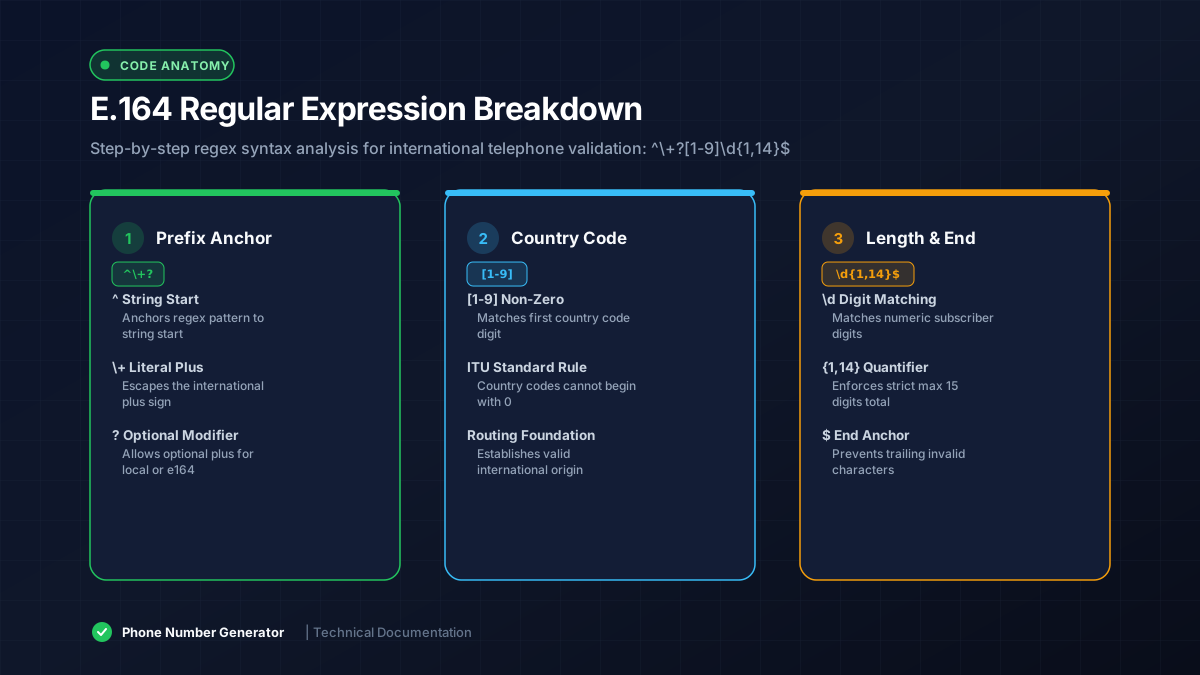
Every regex pattern needs testing against both valid and invalid examples before deployment. A dedicated regex tester tool lets you quickly confirm behavior without writing full application code first.
| Input | Should Match? |
|---|---|
| +15551234567 | Yes |
| 5551234567 | Yes |
| 555-123 | No |
| abc1234567 | No |
Regex works best as a first-pass filter, catching obviously malformed input quickly. It shouldn’t be the only layer, since a full phone validation system also needs country-aware length and format checks.
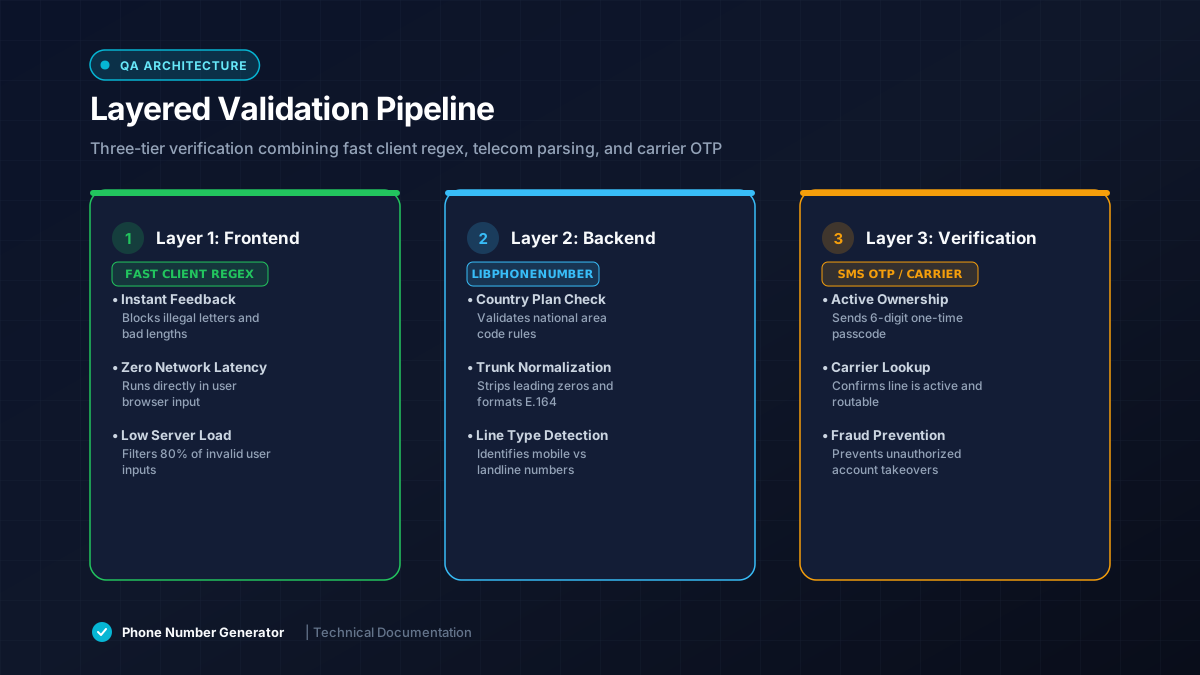
Combining a fast regex check with a more thorough parsing library gives you both speed for common cases and accuracy for the trickier, less common international edge cases.
Global numbering plan rules vary too much for a single pattern to handle reliably. Some countries allow flexible lengths, others enforce strict digit counts, making one universal phone number regex impractical to maintain accurately.
Attempting to cram every country’s rules into one massive pattern usually creates something unreadable and error-prone, rather than something genuinely more accurate or useful for real validation needs.
Pairing regex with a proper parsing library covers more ground than either approach alone. Regex handles quick format checks, while the library manages country-specific rules and phone number parser logic more precisely.
This layered approach balances performance and accuracy, using the lightweight regex check for obvious rejections before passing borderline cases through more thorough, country-aware parsing logic.
An overly rigid phone pattern matching rule can reject real, valid numbers simply because they don’t fit an assumed format. This creates false negatives, frustrating legitimate users during signup or checkout.
Testing your pattern against a wide variety of real, international examples helps catch this problem before it reaches production, where it quietly costs conversions without an obvious, easily traceable cause.
A well-built phone number regex offers fast, useful first-pass validation, but it works best alongside proper normalization and parsing tools. Balancing simplicity with accuracy keeps your phone validation system both fast and genuinely reliable.