Phone Number Generator: Random & Fake Numbers for Testing
Learn how to use random and fake phone number generators for safe application testing, QA pipelines, and preventing accidental real user contact.
Sarah Chen•
Learn how to use random and fake phone number generators for safe application testing, QA pipelines, and preventing accidental real user contact.
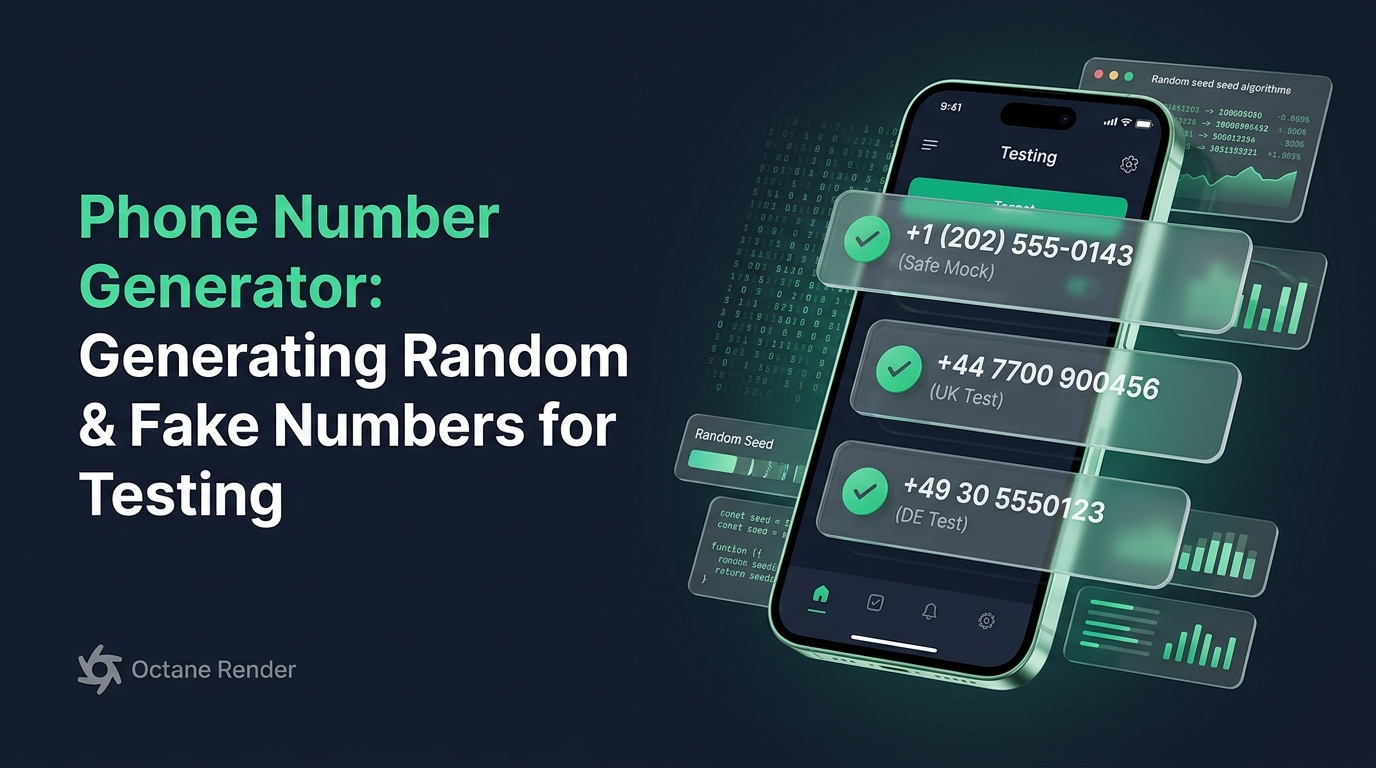
Testing an app without real user data is a smart move. A good phone number generator saves you from spamming real people while you test forms, sign-ups, or SMS flows. This guide walks through everything you need to know about using a random phone number generator and fake phone number tools the right way.
A random phone number generator creates numbers that look real but aren’t tied to any actual person. It’s built for one job: giving developers safe phone number test data without risking real accounts. These tools follow standard formatting rules, so the output still looks like a normal telephone number.
Most tools rely on synthetic phone numbers, meaning the digits are made up but structured correctly. This matters for phone number format checks. A test phone number generator usually lets you pick a country, area code, or number range before generating your list.
A fake phone number looks like any other number, but it won’t connect to a real line. This is the key difference for fake numbers for testing. Real numbers route through carriers. Dummy phone numbers don’t, which keeps your testing safe.
Some ranges are officially reserved for this purpose, which makes them ideal for safe fake phone numbers. Using these avoids fake number testing mishaps, like accidentally dialing or texting a stranger. Here’s a quick comparison:
| Type | Connects to a Real Line? | Safe for Testing? |
|---|---|---|
| Real phone number | Yes | No |
| Dummy phone number | No | Yes |
| Mock phone number | No | Yes |
| Placeholder phone number | No | Yes |
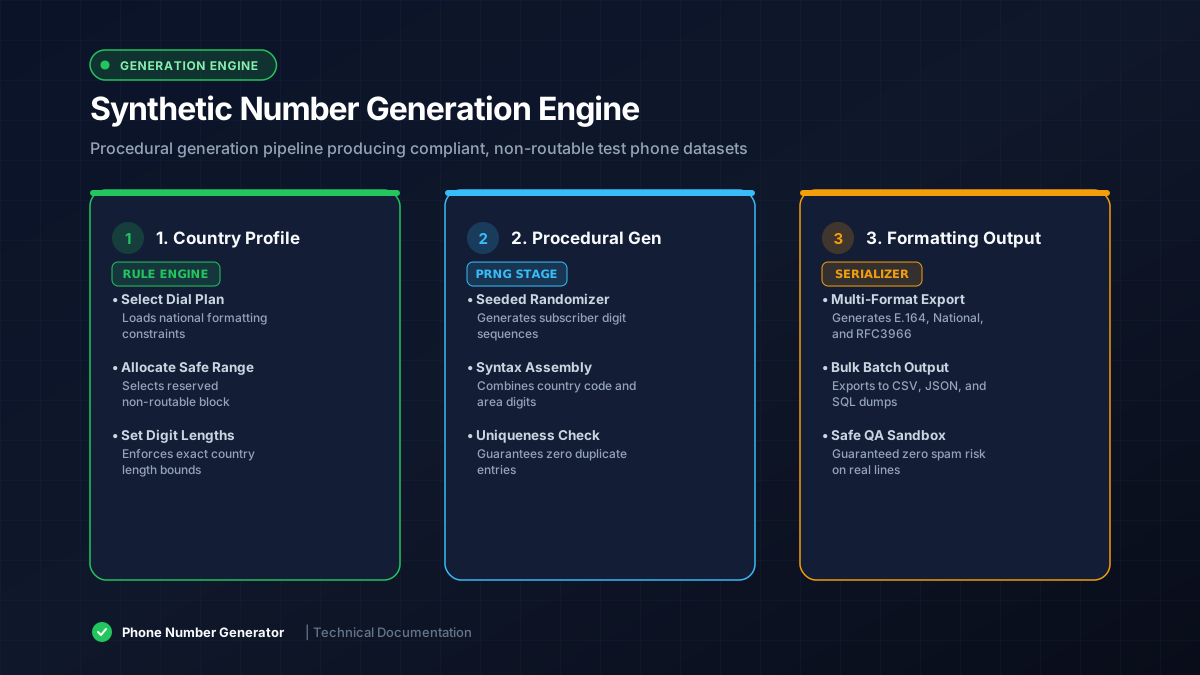
Developers rely on generated phone data constantly during application testing. Whether it’s unit testing phone numbers or full integration testing phone numbers, having consistent developer test data speeds up the whole process. It also protects real users from test traffic.
QA testing teams use these numbers for signup testing phone numbers, registration test numbers, and form testing phone numbers. A solid developer phone generator can create hundreds of entries in seconds, which is perfect for automated testing phone numbers pipelines.
This is where many teams slip up. Random digits might accidentally match a real, working number. That’s why safe testing numbers stick to officially reserved ranges instead of pure randomness. A trustworthy phone number randomizer avoids live carrier ranges entirely.
For US testing, the 555 exchange is the classic example of numbers set aside by regulators. Using a proper phone number sampler that respects these reserved blocks keeps your test environment clean. It’s a small detail that prevents big headaches later, like real complaints from strangers.
Global apps need more than one country code in their testing plan. If you only test US numbers, you’ll miss bugs in international phone test data. A flexible phone generator for software testing should support multiple country phone data formats.
Here’s a simple breakdown of common testing needs by region:
| Region | Country Code | Common Use |
|---|---|---|
| United States | +1 | Sample phone number testing |
| United Kingdom | +44 | International number testing |
| Global apps | Varies | Phone number dataset builds |
Building a full phone number dataset across regions helps catch phone number edge cases before launch, like formatting errors or missing digits.
Every sign-up page needs test numbers for forms at some point. Whether you’re checking phone input testing logic or verifying phone validation rules, sample telephone number entries make the job easier. You avoid using your own real number over and over.
This matters even more for SMS testing data and OTP testing numbers. Apps that send verification codes need reliable authentication test data. Teams use phone field testing and telephone field testing to confirm the input fields react correctly to both valid phone number samples and invalid phone number testing cases.
Reserved ranges exist so testers never bother real people. These numbers are labeled non-routable, meaning no carrier will connect a call or text. This is the backbone of any solid test phone number examples list. It’s a simple system, but it works well.
Using these ranges also protects your company legally. Spamming random real numbers can trigger complaints or even fines. Sticking to generated contact data built from reserved blocks means your staging phone data and development phone data stay fully compliant.
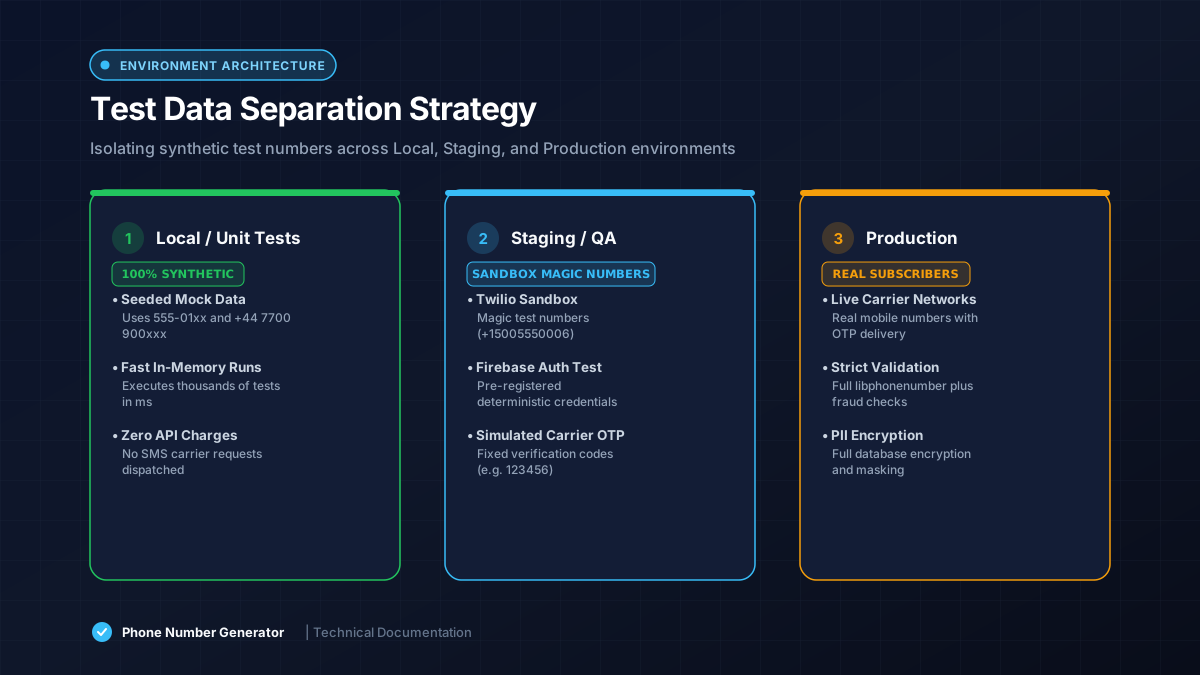
Mixing test and real data is a common, costly mistake. Dummy contact information should never touch your live database. Keep a clear line between your test contact dataset and real customer records, ideally using separate environments entirely.
Many teams label their mock contact records clearly, so no one confuses them with fake user records and real ones. A dedicated production safe test data policy, paired with a test data generator, keeps things organized as your app scales.
Fake numbers are built for testing, not for real communication. Never use generated contact list entries to sign up for real services or bypass identity checks. That crosses from testing into misuse, and it can violate a platform’s terms of service.
As one QA lead put it, “Synthetic user data should stay inside the sandbox, never the real world.” Keep your synthetic contact data confined to your development environment, and you’ll avoid both ethical and legal trouble.
A reliable phone number generator for testing makes development smoother and safer. From phone data automation to telephone number validation testing, the right tool saves time and protects real users. Stick to reserved ranges, separate your test and production data, and your phone number test environment will stay clean and reliable.