Phone Number Formats by Country: A Quick Reference for Developers
A developer reference for international phone number conventions, country codes, trunk prefixes, variable lengths, and normalization rules.
Marcus Vance•
A developer reference for international phone number conventions, country codes, trunk prefixes, variable lengths, and normalization rules.
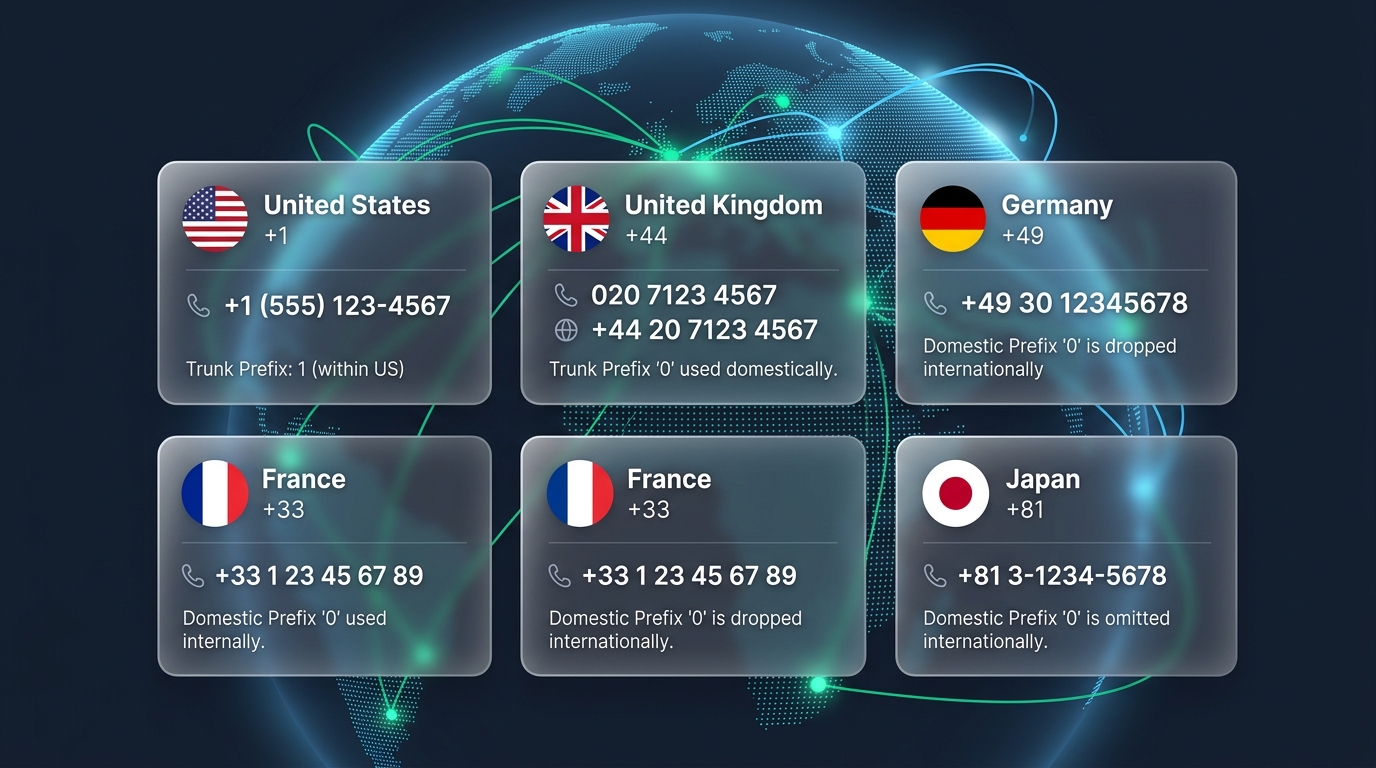
Building an app for a global audience means dealing with wildly different phone number formats. This guide breaks down why they differ and how developers can handle them without constant headaches.
Every country manages its own telephone numbering plan, shaped by history, population size, and telecom infrastructure decisions made decades ago. That’s why international phone formats vary so dramatically from one region to the next.
Some countries use fixed-length numbers, while others allow variable lengths depending on region or carrier. This inconsistency is exactly why developers need flexible, well-tested tools rather than hardcoded assumptions about format.
Country calling codes sit at the front of every international number, telling systems exactly where to route the call. The US and Canada share code 1, while the UK uses 44 and Japan uses 81.
Getting this right is essential for international dialing, since a missing or incorrect country code makes a number impossible to route correctly, even if every other digit is technically valid.
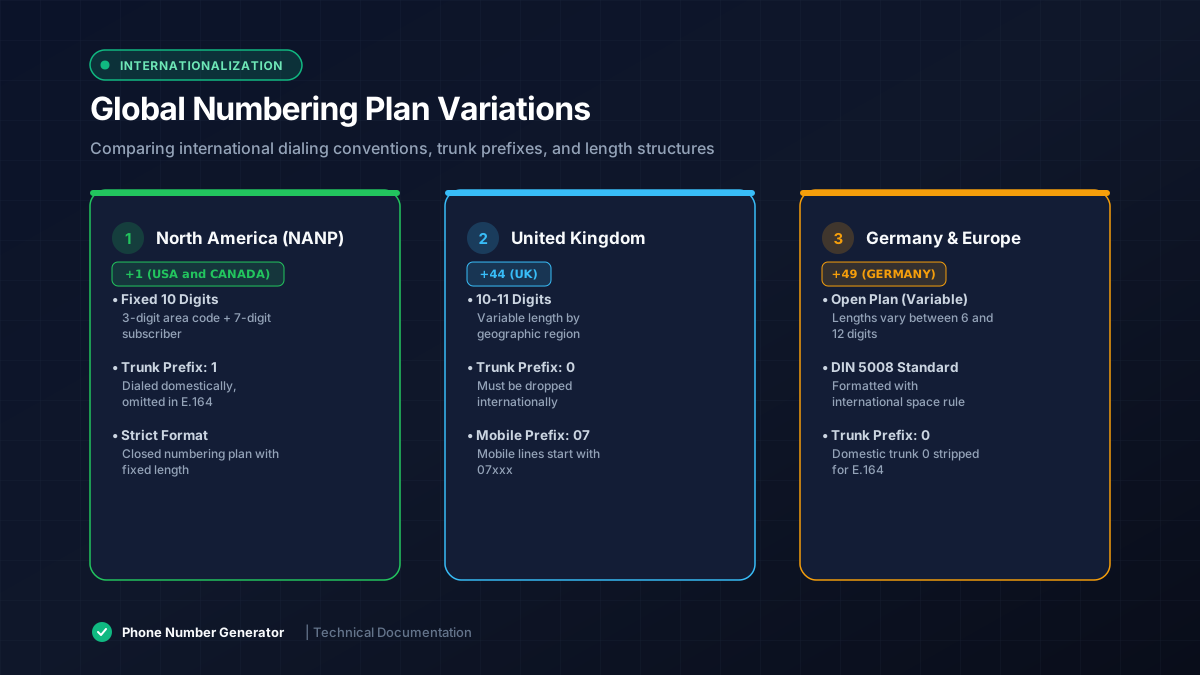
A national phone format works only within its home country, often including a trunk prefix that gets dropped internationally. The international number version strips this local-only piece and adds the country code instead.
This is why storing only the national format in your database causes problems later, once you need to support users calling or texting from outside that number’s home country.
Mobile number format and landline format patterns aren’t universal. Some countries assign distinct prefixes to mobile ranges, while others use a shared numbering pool for both types of lines.
Understanding these regional patterns helps developers build smarter phone number formats validation, especially for features like SMS-only verification that require identifying mobile numbers specifically.
Phone normalization converts every incoming number into one consistent, storable format, usually E.164. This removes formatting inconsistencies before they ever reach your database or trigger a failed international phone validation check.
Using a dedicated parsing library rather than custom regex saves significant time, since country-specific rules change occasionally and library maintainers track these updates for you automatically.
Some countries require area codes even for local calls, while others don’t. Handling these country-specific formats correctly means testing against real examples rather than assuming one universal pattern applies everywhere.
Here’s a simplified reference table:
| Country | Code | Format Note |
|---|---|---|
| United States | +1 | 10-digit national number, no leading zero |
| United Kingdom | +44 | Drops leading zero internationally |
| Germany | +49 | Variable length, drops leading zero |
| Japan | +81 | Drops leading zero, area code varies |
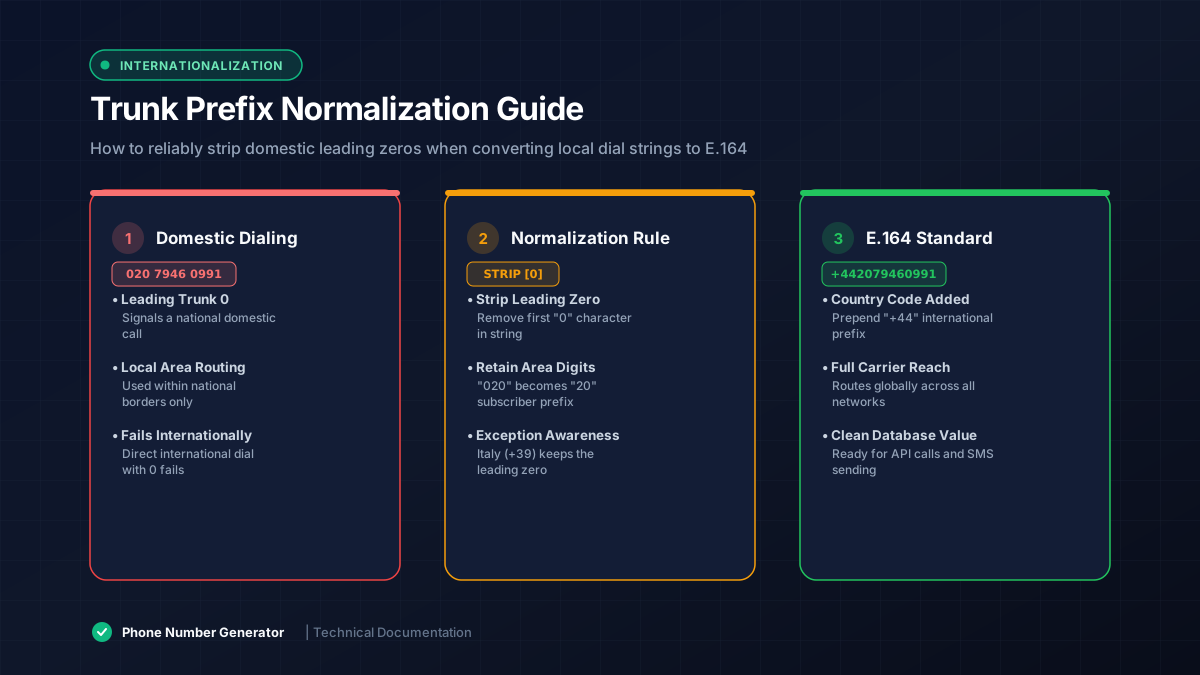
A trunk prefix like the UK’s leading zero exists purely for domestic dialing convenience. It has no meaning once a country code is added for international dialing, which trips up developers unfamiliar with the convention.
Failing to strip trunk prefixes during phone normalization is one of the most common bugs in international-facing signup forms and contact databases.
Not every country uses a fixed-length subscriber number. Some allow shorter or longer numbers depending on region, which means rigid, fixed-digit validation rules will incorrectly reject perfectly valid entries.
Flexible validation, built around each country’s actual numbering plan rather than a single global rule, catches far fewer false negatives during real-world international phone validation.
Regional differences affect more than just formatting, they influence how apps design phone-based features entirely. Some regional numbering plan quirks require extra fields, like optional extensions or area indicators, depending on the target market.
Developers building for specific regions should research local conventions directly rather than relying solely on generic international libraries, which sometimes miss smaller regional nuances.
Supporting diverse phone number formats takes deliberate planning, not guesswork. By normalizing early, respecting country calling codes, and testing against real regional examples, developers avoid the most common international formatting failures.