Fake vs. Temporary Phone Numbers: Which One Do You Actually Need?
Understand the fundamental differences between synthetic fake phone numbers and real disposable temporary numbers for testing and privacy protection.
David Kross•
Understand the fundamental differences between synthetic fake phone numbers and real disposable temporary numbers for testing and privacy protection.
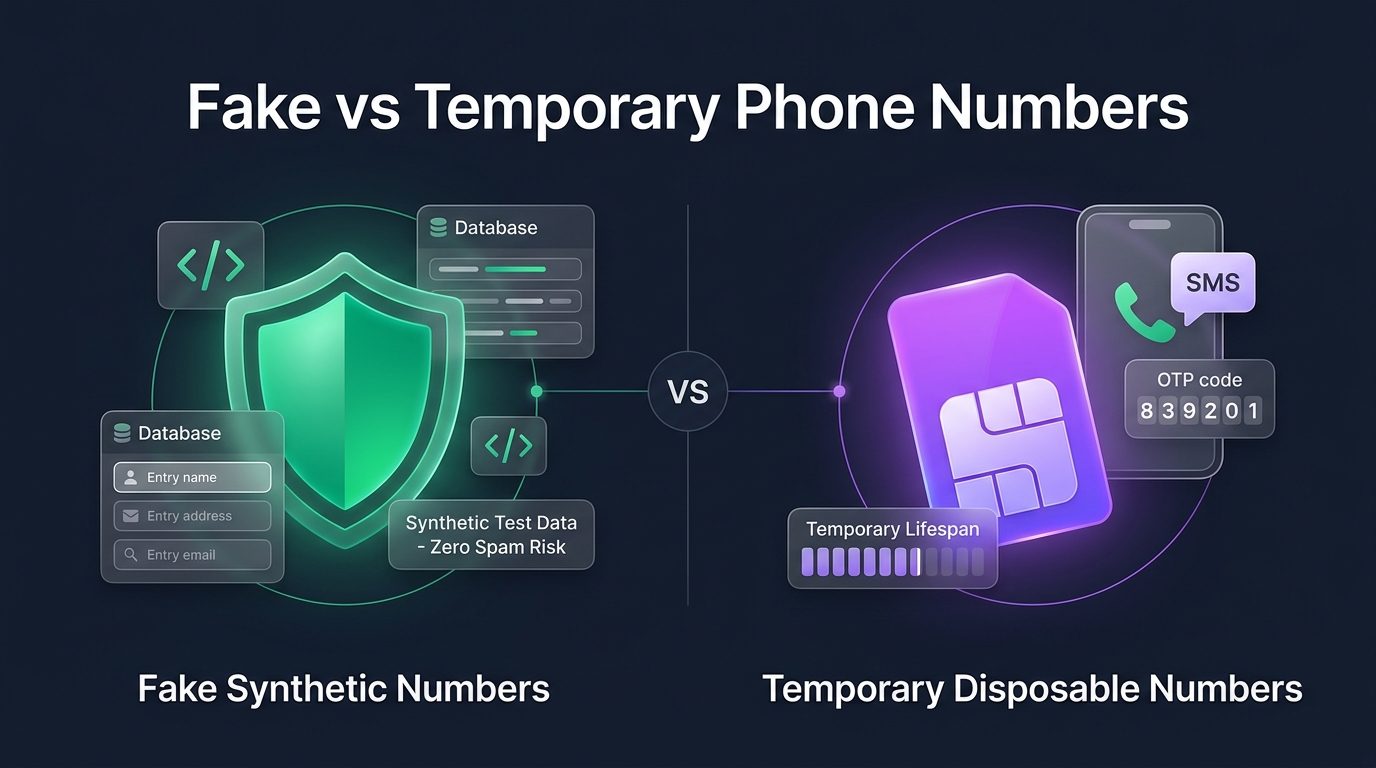
Not every situation calling for a non-real number needs the same solution. Choosing between a fake phone number and a temporary phone number depends entirely on what you’re trying to accomplish, and picking wrong can waste time or create real problems.
A fake phone number is a made-up or synthetic number that doesn’t connect to any real line. It exists purely on paper or in a database, used mostly for test phone number scenarios where no real communication ever needs to happen.
These numbers work great for dummy number entries in forms, demos, or development number fields where you just need something that looks realistic without functioning as a working contact method.
A temporary phone number is different, it’s a real, working number issued for short-term use. Unlike a purely fictional entry, this actually receives calls and texts, making it useful for temporary communication needs that require genuine two-way interaction.
Services offering disposable number rentals let you receive verification codes or messages without exposing your personal real phone number, then discard the number once you’re finished using it.
A fake phone number serves testing and placeholder needs. A temporary phone number serves actual short-term communication where a real inbound message is expected. Confusing the two leads to broken workflows fast.
If you need to receive a real text message, only a temporary number or virtual phone number will work, since a purely fictional entry has no way to actually receive anything sent to it.
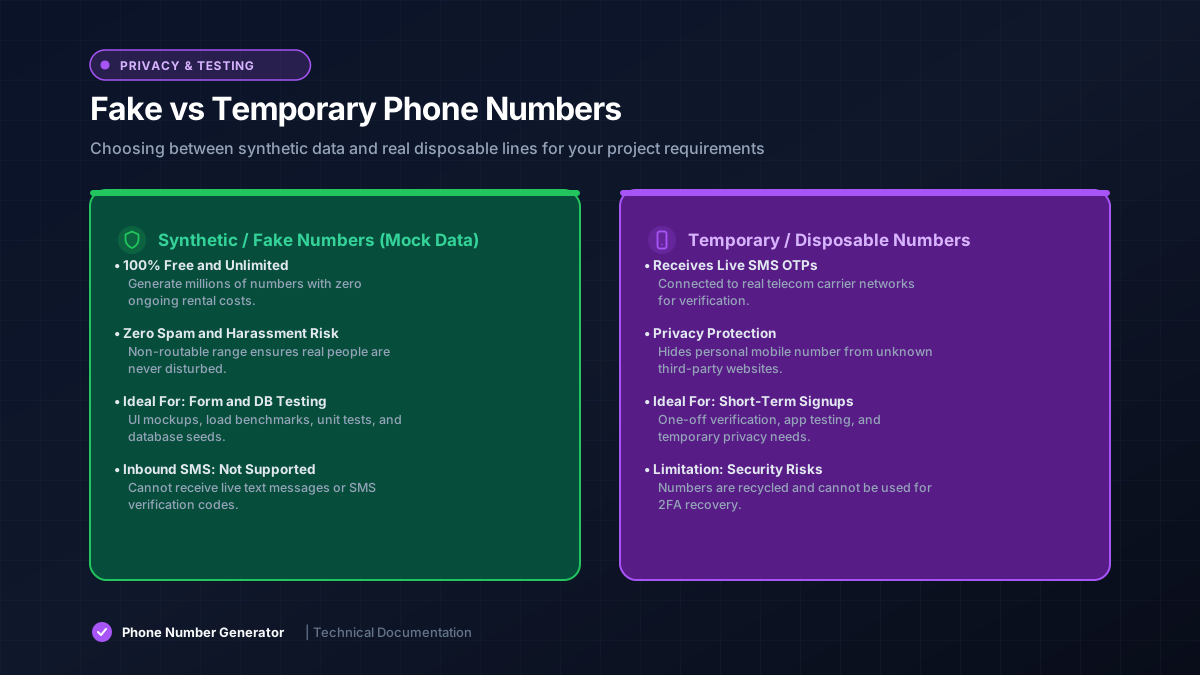
Developers reach for a synthetic number whenever they’re testing forms, validating phone number types, or populating a database with realistic-looking test data. No real communication is required, so a fake entry does the job perfectly.
This approach keeps phone number testing clean and repeatable. Teams can run the same test suite thousands of times without worrying about real messages or calls being triggered accidentally during automated runs.
Temporary number services shine when someone needs to sign up for something and receive an actual verification code, without handing over a personal line. This protects phone privacy in situations involving unfamiliar or lower-trust platforms.
Travelers, online sellers, and privacy-conscious users often rely on these alternate phone number services for exactly this reason, keeping their real phone number private while still completing necessary verification steps.
If your test doesn’t need to receive anything real, stick with a fake phone number. If it does, like testing an actual SMS delivery pipeline end to end, a temporary phone number becomes necessary instead.
Here’s a simple comparison to guide the decision:
| Need | Best Option |
|---|---|
| Populate a form field | Fake phone number |
| Receive a real verification text | Temporary phone number |
| Automated phone number testing | Synthetic number |
| Sign up for a low-trust service | Virtual phone number |
A virtual telephone number typically refers to a longer-term number hosted through an internet-based service, rather than tied to a physical SIM card. It’s more permanent than a disposable phone number but still separate from your primary line.
Businesses often use virtual phone number services for customer support lines, keeping them distinct from both quick temporary number rentals and purely fictional test data used in development environments.
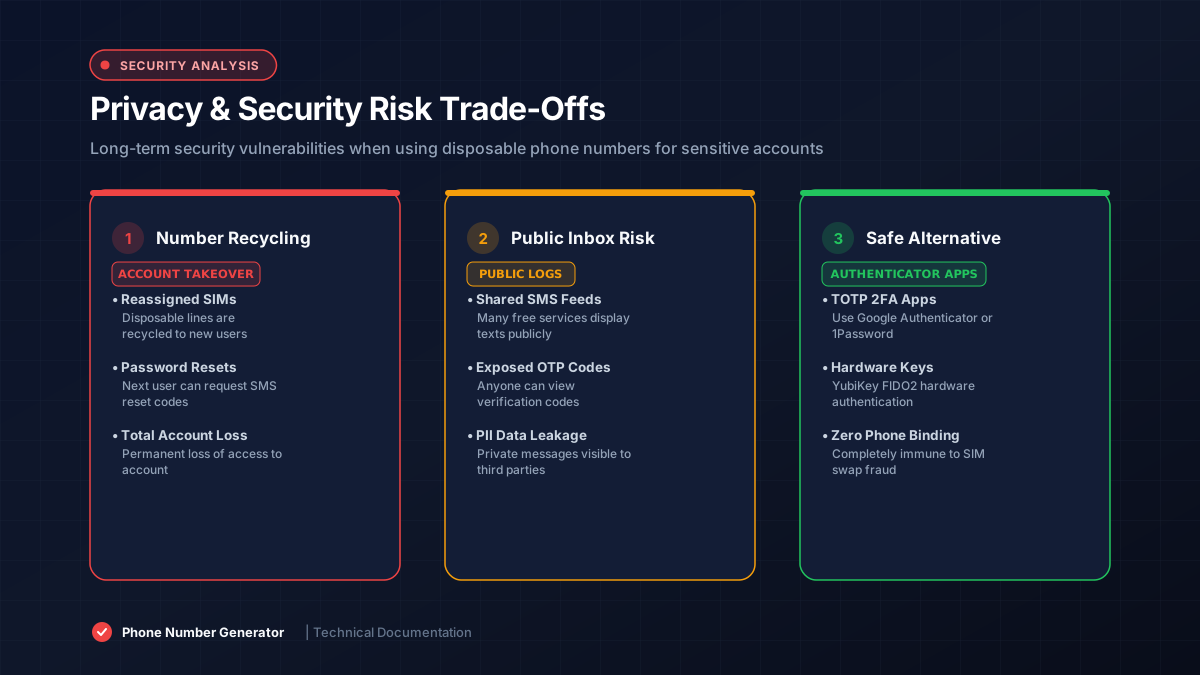
Fake phone number entries offer zero privacy risk since they don’t connect to anything, but they’re also completely non-functional for real use. Temporary number services offer real functionality but carry some reliability limitations, since numbers can expire or get recycled.
Weighing phone privacy tools against actual communication needs helps determine which trade-off makes sense. For pure test data purposes, the reliability question rarely matters since no real message is ever expected.
Using a temporary phone number for something important, like a banking account or long-term email recovery, is risky. These numbers often get reassigned once the rental period ends, cutting off future recovery access.
Critical accounts deserve a real phone number you control long-term. Save disposable number and temporary phone number services for low-stakes signups, testing, or situations where privacy matters more than long-term access.
The right choice comes down to whether you need real communication. A fake phone number suits test data and development needs perfectly, while a temporary phone number fits situations requiring genuine, short-term, privacy-conscious contact.